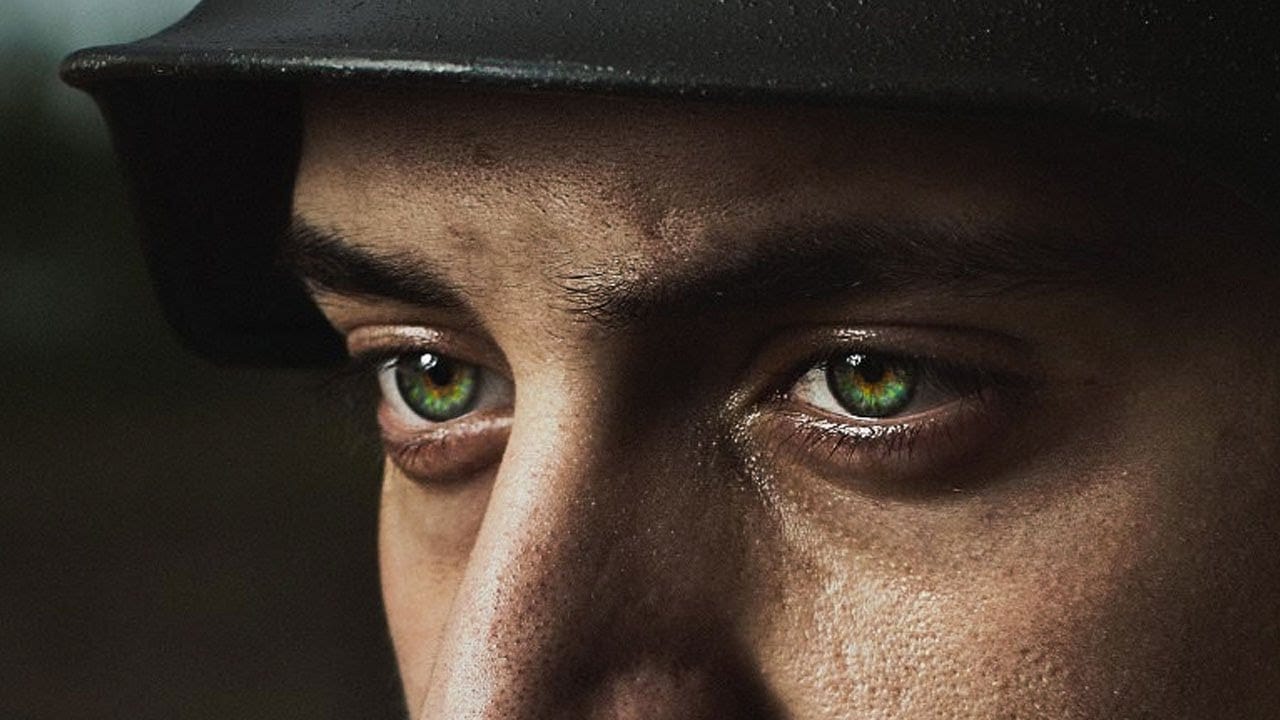
3 must-try techniques to enhance colors in Photoshop

3 must-try techniques to enhance colors in Photoshop

Many photographers and designers seek to infuse their images with vibrant, true-to-life colors that truly stand out. Achieving this level of color enhancement often requires more than basic adjustments; it demands a nuanced approach that breathes life into every detail.

This tutorial uncovers three powerful, yet often overlooked, Photoshop techniques to elevate your color grading. Discover how to apply subtle, realistic color changes, sculpt specific color moods, and selectively refine tones within your photos.

Watch the Full Tutorial Here

Video by Brendan Williams. Any links or downloads mentioned by the creator are available only on YouTube

Beyond Basic Adjustments: Mastering Color Fidelity

Photoshop offers a vast array of tools for color adjustment, but true mastery lies in understanding how to apply these tools with precision and realism. Moving past standard sliders, advanced techniques ensure that color enhancements integrate naturally into an image rather than appearing as an artificial overlay. By leveraging detailed masks and selective targeting, artists can achieve nuanced color shifts that maintain image integrity while significantly boosting visual impact. This approach allows for a transformative yet authentic color grading process, bringing depth and emotion to digital art.

Key concepts explored include:

  • Using layer masks with the Apply Image function for realistic blending.
  • Sculpting specific color moods with Gradient Maps and Blend If.
  • Precisely targeting colors and luminance values with Range Masks in Camera Raw.
  • Avoiding unnatural color casts by integrating adjustments seamlessly.
  • Achieving greater control over how color effects interact with image tones.

Practical Tips for Enhancing Colors

  • Apply Color Balance or Selective Color adjustments with an Apply Image layer mask for natural color blending. This ensures colors interact realistically with the underlying image exposures.
  • Utilize Gradient Maps with Overlay or Soft Light blending modes to introduce specific color vibes, such as warm summer tones or cool atmospheric effects.
  • Refine Gradient Map adjustments by employing the Blend If feature in Layer Styles to control which exposure ranges are affected. Hold Alt/Option while dragging sliders to feather the effect smoothly.
  • Convert your layer to a Smart Object before entering Camera Raw Filter to maintain non-destructive editing for selective adjustments.
  • Use Range Masks within Camera Raw's selective adjustment tools (e.g., Radial Filter) to precisely target specific colors or luminance values. This enables localized color and exposure correction without complex manual masking.

More Tutorials about Color Enhancement in Photoshop

Explore additional resources to deepen your understanding of color theory and advanced editing techniques in Photoshop.
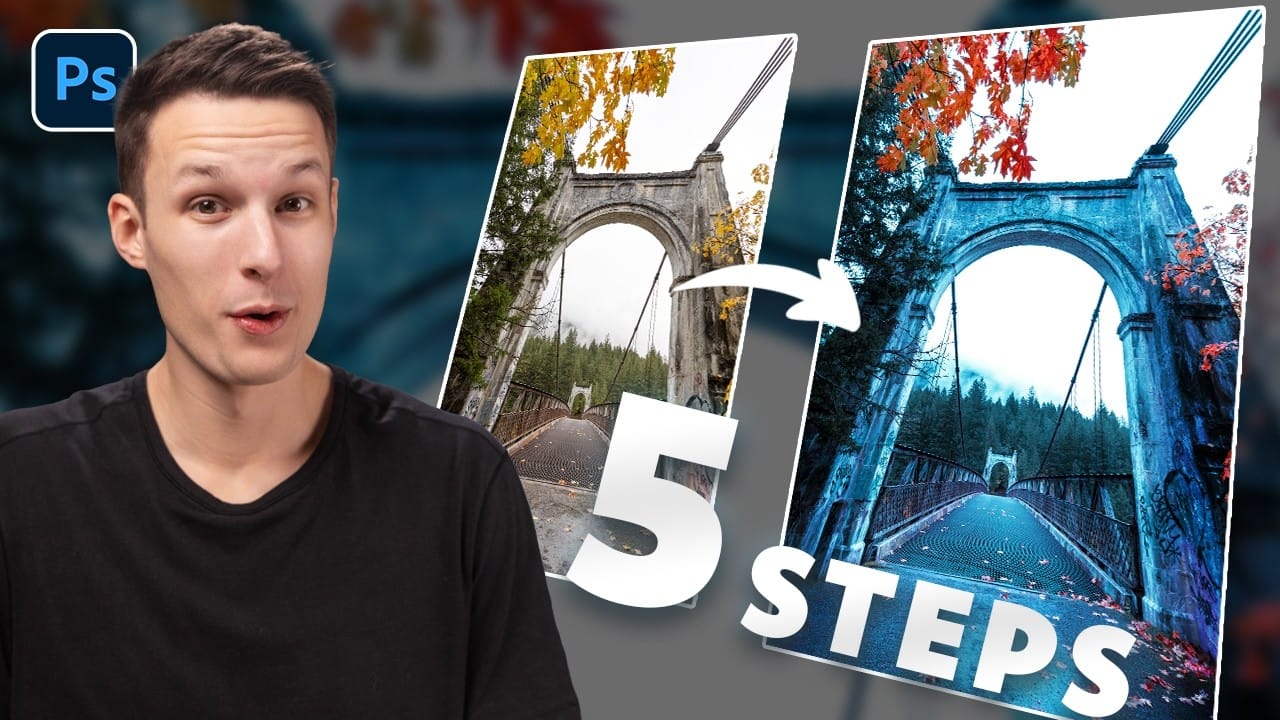
How to Create Dramatic Colors in Photoshop: A 5-Step Color Grading Process
Photography often captures moments in natural tones, but sometimes an image calls for something bolder. Dramatic color grading transforms ordinary photos into striking visual statements that grab attention and evoke emotion. This comprehensive approach combines Camera Raw adjustments with Photoshop's powerful color tools to create rich, cinematic looks. The process works especially well for outdoor scenes where you can push blues, oranges, and complementary colors to their limits. Watch the T
Six easy ways to select colors in Photoshop
In this episode of "3, 2, 1… Photoshop!", longtime Adobe evangelist Julieanne Kost shares essential tips and tricks for selecting colors in Photoshop. Julieanne introduces six easy methods to choose colors effectively, whether you're working on a detailed project or just need a quick color pick. You'll learn how to use the eyedropper tool for precise color selection, manipulate foreground and background colors, and utilize the heads-up-display (HUD) color picker for a more interactive experienc
How to Apply Graphics and Change Colors in Photoshop
Integrating graphics and adjusting colors are fundamental skills in Photoshop, enabling designers and artists to transform disparate elements into cohesive visual narratives. From compositing a logo onto a product image to blending text into a scene, mastering these techniques is crucial for achieving professional results. This video demonstrates practical methods for seamlessly applying graphics from one image to another, extracting specific elements like text, and efficiently changing their c
How to Color, Brighten and Sharpen Eyes in Photoshop
In this tutorial by Aaron Nace from Phlearn, learn how to enhance eyes in Photoshop to make them captivating and sharp. Techniques include coloring the eyes by sampling natural hues and adjusting lightness and saturation, using blending modes like "Soft Light" or "Overlay" for a natural look, and softening edges with Gaussian Blur. Dodge and Burn techniques are used to enhance depth and light in the pupils, while selective sharpening draws attention to the eyes, making them stand out in portrai

Get tutorials & freebies delivered to you.

Subscribe to the Photoshop Roadmap newsletter, a weekly roundup of new tutorials, insights and quality downloads, trusted by 6500+ readers.

You might also like

30 Days of Photoshop: The Complete Series Breakdown for Beginners

If you’ve ever wanted a structured way to learn Photoshop without jumping between random tutorials, this series is about as close as it gets. Aaron Nace, from PHLEARN, created a free “30 Days of Photoshop” training series where each day focuses on a specific skill — starting from absolute basics...

How to Create Realistic Lighting Effects and Dust Particles in Photoshop

Creating convincing lighting effects requires more than just adding a bright spot to your image. The key to realism lies in ensuring your subject already has highlights that match the direction of your artificial light source, making the effect appear natural and believable. This technique combines a simple soft brush...

How to Set Up Mouse Scroll Zoom in Photoshop for Faster Navigation

Constantly reaching for the magnify tool or right-clicking to access zoom options disrupts your creative flow and slows down detailed work. Most users don't realize that Photoshop includes powerful scroll wheel zoom features that aren't enabled by default. These simple preference settings transform navigation into smooth,...

How to Fix Layer Panel Thumbnails Showing the Full Canvas in Photoshop

When working with complex layered files, layer thumbnails that display the entire canvas instead of just the layer content make it difficult to identify specific layers at a glance. This common issue occurs when the layers panel is set to show the "entire document" rather than focusing on...

Game Boy Pixel Effect Tutorial in Photoshop

The distinctive monochrome pixelated aesthetic of the original Game Boy has become an iconic visual style that evokes powerful nostalgia for classic handheld gaming. This technique transforms ordinary photographs into high-contrast, pixelated artwork that mimics the characteristic black and white display of Nintendo's legendary portable console. The process...

How to Cut Out Trees Using Blend If in Photoshop

Trees with complex branching patterns challenge traditional selection tools, often leaving messy edges and incomplete cutouts. The Blend If feature offers a powerful alternative for extracting trees from contrasting backgrounds by targeting specific color channels rather than attempting pixel-by-pixel selection. This technique works particularly well when trees are photographed against...

You’ve successfully subscribed to Photoshop Roadmap
Welcome back! You’ve successfully signed in.
Great! You’ve successfully signed up.
Success! Your email is updated.
Your link has expired
Success! Check your email for magic link to sign-in.