7 Photoshop Tools Replaced by AI: Are They Still Relevant?

7 Photoshop Tools Replaced by AI: Are They Still Relevant?

Adobe's integration of AI-powered features has fundamentally changed how photographers and designers approach common editing tasks. From reflection removal to noise reduction, many traditional Photoshop tools now have AI counterparts that promise faster results with minimal manual work.

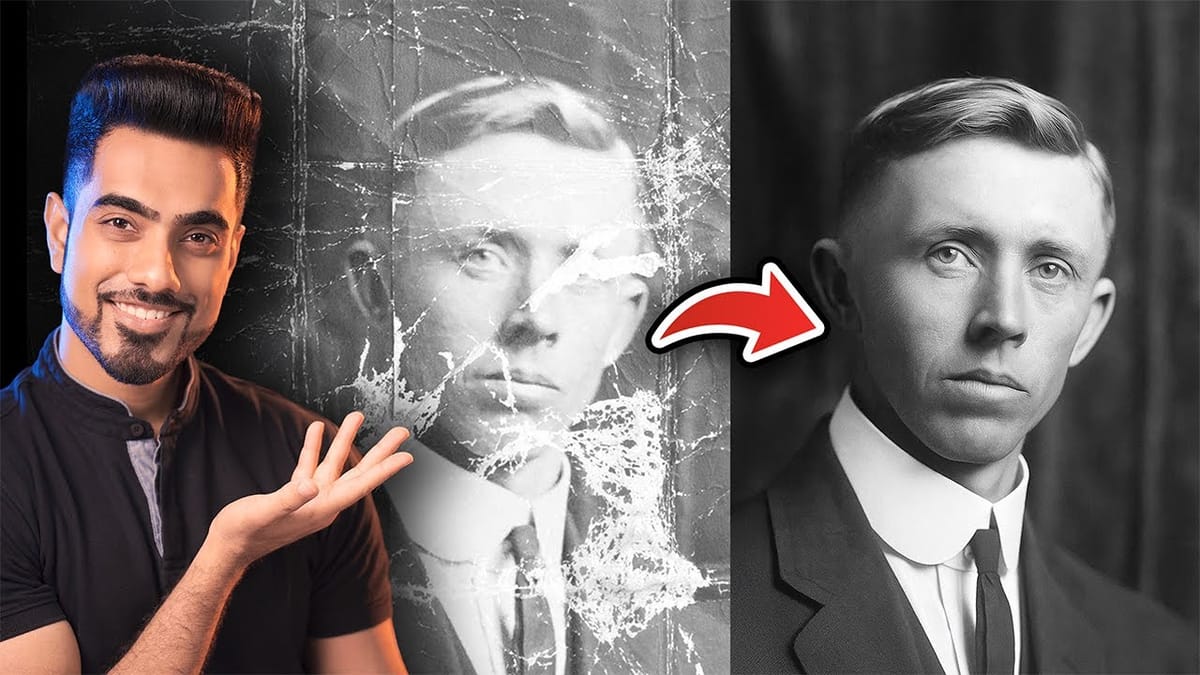
This video demonstrates how seven classic Photoshop tools compare against their AI replacements, showing practical examples of when the new technology excels and when traditional methods still hold their ground. You'll see real-world comparisons and learn which tools remain essential for professional work.

Watch the Tutorial

Any links or downloads mentioned by the creator are available only on YouTube

The Evolution of Photo Editing Technology

The shift from manual to AI-assisted editing represents one of the most significant changes in digital photography since the introduction of RAW processing. Traditional tools like Content-Aware Fill and the Clone Stamp required substantial skill and time investment to master. These tools demanded careful sampling, precise brush work, and often multiple attempts to achieve professional results.

Modern AI systems approach these same tasks differently by analyzing entire image contexts rather than relying on simple pattern matching. They can understand complex relationships between foreground and background elements, making decisions about lighting, texture, and perspective that would require considerable expertise with manual tools. This contextual understanding allows AI to handle challenging scenarios like removing objects from intricate backgrounds or reconstructing missing detail behind removed elements.

However, the creative control aspect remains crucial for professional work. AI tools excel at speed and automation but often lack the nuanced decision-making that experienced editors bring to their projects. The balance between efficiency and artistic control continues to define how these technologies integrate into professional workflows.

Practical Tips for AI-Enhanced Editing

  • Test the new reflection removal feature in Camera Raw 17.1+ by opening RAW files and checking Technology Previews in preferences
  • Use traditional tools like Clone Stamp for precise control when AI results affect important details like skin edges or product boundaries
  • Combine AI automation with manual refinement—let AI handle bulk removal, then use traditional brushes for fine-tuning
  • Enable "sample all layers" when using AI removal tools to ensure the algorithm considers your entire composition
  • Keep the Pen Tool in your workflow for creating smooth, intentional selections that match your artistic vision rather than relying solely on automated edge detection

Explore more techniques for integrating AI tools into your editing workflow.

New Photoshop AI Features – Smarter, Faster, and More Efficient Tools!
Editing detailed selections, adjusting colors, and removing backgrounds in Photoshop can be tedious, especially when working with complex edges like hair or challenging objects. Manual work often stalls creative flow and makes it tough to achieve clean, professional results on tight deadlines. This article introduces essential, time-saving features in the
10 Ways AI Completely Transformed My Photoshop Techniques
Repetitive tasks like making complex selections, removing unwanted objects, and cleaning up blemishes can consume hours of an editor’s time. While traditional Photoshop methods offer precise control, they are often slow and require significant technical skill for what should be simple fixes. This guide demonstrates how to integrate modern AI
Generative AI: A new era of Photoshop begins
Generative AI has made its way into the world of Photoshop, and in this fascinating video, Colin Smith from Photoshop Cafe explores its transformative capabilities. Generative AI is an incredible technology that’s transforming the world of artificial intelligence. It’s like having a creative companion that can generate all sorts of new content, from stunning images […] More
Discover Hidden Photoshop AI Tools to Transform Your Photos
In this Photoshop tutorial, Colin Smith demonstrates some hidden AI features that can transform regular photos into works of art. He shows viewers how to take advantage of Adobe’s powerful generative fill tool to turn images into watercolor and oil paintings with just a few clicks. Colin dives into the settings for generative fill and […] More
Photo Restoration: Combining AI with Photoshop for Optimal Results
Restoring old, damaged photographs can be a challenging endeavor. While many AI-powered tools promise to breathe new life into vintage images, they often fall short, either over-sharpening details, neglecting certain areas, or, most critically, altering the original likeness of individuals. This often leads to frustrating and uncanny results that strip

Get tutorials & freebies delivered to you.

Subscribe to the Photoshop Roadmap newsletter, a weekly roundup of new tutorials, insights and quality downloads, trusted by 6500+ readers.

You might also like

Create a Liquid Gel Logo Effect in Photoshop

Liquid gel effects transform flat logos into dimensional, glossy designs that appear to bubble and flow. This technique uses multiple layer styles and strategic duplication to build depth, creating surfaces that catch light like thick, viscous liquid. The method combines gradient overlays, bevel effects, and inner glows across several duplicated...

How to Use Photoshop's AI Sharpen Filter and When It's Worth the Cost

Photoshop's new AI Sharpen filter promises one-click sharpening powered by advanced algorithms. This tool uses technology from Topaz Labs to enhance image details without manual adjustments, but it comes with a significant cost in credits. Understanding when to use this automated approach versus traditional methods like the High...

How to Use Harmonize and Generative Upscale Tools in Photoshop

Creating realistic photo composites requires matching lighting and color between different images—a traditionally time-consuming process. Two new AI-powered tools in Photoshop solve these challenges: Harmonize automatically adjusts lighting and shadows to blend subjects seamlessly into backgrounds, while Generative Upscale enlarges small images without losing detail. These tools work together...

How to Create Convincing Scale Effects in Photoshop Composites

Creating believable scale effects requires more than simply resizing objects—it demands understanding how light, perspective, and atmospheric conditions change with distance. When tiny subjects appear massive or giant objects seem miniature, viewers should feel the illusion is completely natural. This technique combines careful attention to lighting consistency, depth cues,...

How to Flip Images Horizontally and Vertically in Photoshop

Flipping images is a fundamental technique that can dramatically change the composition and impact of your photos. Whether you need to correct the orientation of a subject, create mirror effects, or simply improve the visual flow of your design, knowing how to quickly flip images both horizontally and vertically gives...

How to Use Nano Banana Pro in Photoshop for Background Replacement and Scene Changes

Nano Banana Pro transforms how you place subjects into new environments in Photoshop. This advanced AI model maintains perfect subject likeness while seamlessly integrating them into any background you can imagine. The tool excels at matching lighting, preserving facial features, and even adapting clothing to complement new scenes, all through...

You’ve successfully subscribed to Photoshop Roadmap
Welcome back! You’ve successfully signed in.
Great! You’ve successfully signed up.
Success! Your email is updated.
Your link has expired
Success! Check your email for magic link to sign-in.