Cut Out Glass in Photoshop with Blending Modes

Cut Out Glass in Photoshop with Blending Modes

Achieving a realistic cut-out of transparent objects, like glass bottles, can be a significant challenge in Photoshop. Traditional masking often struggles to maintain the natural light, shadow, and reflective qualities inherent in such items, leading to flat or artificial results.

This video tutorial offers an advanced technique to meticulously mask transparent objects into new backgrounds. It leverages the power of blending modes and strategic layer organization to perfectly integrate the object, ensuring the final composite looks authentic and visually compelling.

Learn How to Mask Glass and Transparent Objects

Video by Photoshop Training Channel. Any links or downloads mentioned by the creator are available only on YouTube

The Art of Transparency: Blending Modes for Realistic Glass Effects

Masking transparent objects in Photoshop often presents a unique challenge, as the goal extends beyond merely isolating the object from its background. True realism requires preserving how light interacts with the transparent surface, including subtle reflections, refractions, and the way background elements appear distorted through the glass. Standard masking techniques, while effective for opaque objects, frequently fall short in capturing these intricate details, often resulting in a rigid or unnatural appearance when placed into a new scene.

This advanced method addresses these complexities by deconstructing the transparent object into its fundamental visual components: shadows, highlights, and color. By isolating these elements into separate layers and applying specific blending modes, artists gain precise control over each aspect of the transparency. For instance, `Multiply` blending mode effectively isolates shadows, while `Screen` emphasizes highlights, allowing the underlying background to show through naturally.

Separating these components enables fine-tuned adjustments and a more dynamic interaction with the new environment. It also facilitates adding realistic elements such as surface highlights and shadows that convincingly anchor the object to its new setting, creating an illusion of depth and physical presence that is crucial for believable composites.

Practical Tips for Masking Transparent Objects

  • Utilize a group layer mask to control all internal layers with a single mask, ensuring consistent boundaries and an efficient workflow.
  • Duplicate the object layer three times and rename them for clarity: Shadows, Highlights, and Color.
  • Desaturate the Shadows layer and apply the `Multiply` blending mode to reveal only the dark areas.
  • Desaturate the Highlights layer and set its blending mode to `Screen` to bring out the bright, reflective parts.
  • Keep the Color layer unsaturated and use the `Color` blending mode to maintain original hues without luminosity interference.
  • Integrate solid parts of the object (e.g., bottle top) by painting white on a new layer positioned beneath the shadows layer, within the group.

More Tutorials about Masking and Blending in Photoshop

Explore additional techniques and creative approaches to mastering complex selections and seamless layer integration.

The Science of All 27 Blend Modes in Photoshop
Explore the comprehensive world of Photoshop's blend modes with Piximperfect's detailed tutorial. This guide provides an in-depth look at all 27 blend modes, breaking down the science and mathematical principles behind each one. You'll start by understanding the basic concept of blend mode groups and their shared properties, before diving into the specifics of individual modes. The tutorial offers clear explanations and practical examples to demonstrate how each blend mode interacts with layers
Create Realistic Wet Glass Effect in Photoshop
Create the Most Realistic Wet Glass or Window Effect with Natural Reflections & Textures in Photoshop! In this comprehensive tutorial, we will explore the art of blending three distinct textures to construct a captivating water droplet effect, authentic condensation, and the weathered appearance of glass, all culminating in a truly immersive visual experience. Through the mastery of advanced blending modes, strategic masking techniques, and the deft application of specialized brushes, we will b
Realistic Blend Effect in Photoshop
In this advanced Photoshop tutorial, WebFlippy guides you through creating a realistic blend effect for text, graphics, or logos on any surface. This tutorial is designed to help you seamlessly integrate elements into various backgrounds, making them look like a natural part of the scene. WebFlippy starts by demonstrating how to properly blend text or logos using Photoshop's powerful tools and techniques. You'll learn how to adjust and match the texture, lighting, and perspective of your surfac
Shiny Glass Text Effect in Photoshop
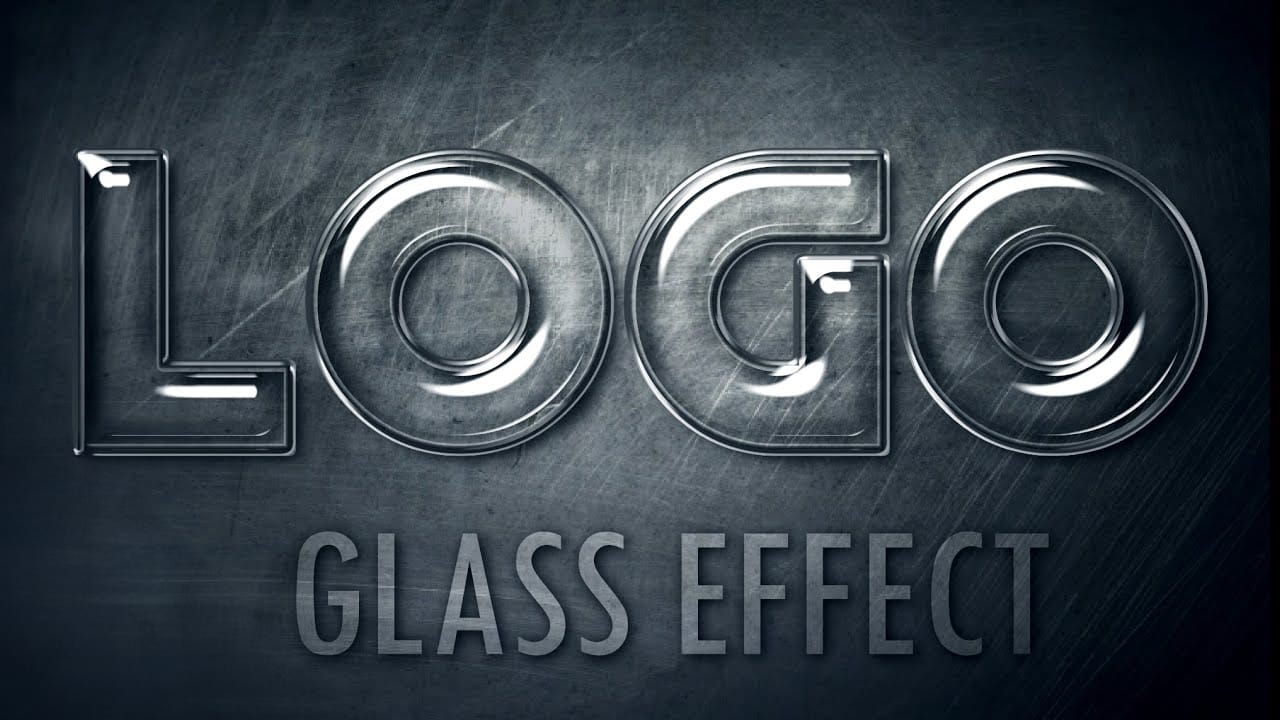
In this tutorial by Learning Screen, you'll learn how to create a shiny glass text effect using the Layer Styles option in Photoshop. The step-by-step guide will show you how to apply this glass effect to any layer or text object, enhancing its appearance with a sleek, transparent look. You'll also learn how to save the effect as a layer style preset, allowing you to quickly and easily apply the glass effect to other layers or text in your projects. This tutorial is perfect for adding a modern

Get tutorials & freebies delivered to you.

Subscribe to the Photoshop Roadmap newsletter, a weekly roundup of new tutorials, insights and quality downloads, trusted by 6500+ readers.

You might also like

How to Create Collage Text Effects in Photoshop

Collage text transforms simple typography into visually striking artwork by combining wrapped paper textures, strategic warping, and careful masking techniques. This creative approach gives letters dimension and character, perfect for artistic projects and unique design elements. The technique involves layering textured materials within letter shapes, then using Photoshop's...

How to Convert Low-Resolution Graphics to Vector Shapes in Photoshop

Pixelated logos and graphics lose their impact when scaled up for print or web projects. Photoshop's Creative Cloud Libraries feature offers a built-in solution for transforming low-resolution black and white images into crisp, scalable vector shapes. This technique works particularly well for simple graphics, logos, and icons that...

How to Use Photoshop's Select Subject Tool for One-Click Selections

Complex selections in Photoshop just became effortless. The Select Subject tool uses advanced AI to automatically identify and select main subjects in images, even those with intricate details like bicycle spokes or hair. This tutorial demonstrates how to achieve professional-quality selections with a single click, saving hours of manual masking...

Understanding Photoshop Blending Modes: A Complete Guide to Layer Blending

Blending modes transform how layers interact in Photoshop, letting you seamlessly combine images without complex masking. This technique reveals only light areas, dark areas, or specific colors from each layer. Master these essential blending groups to create professional composites and artistic effects with just a few clicks. Watch the Tutorial...

Photoshop 2026 New Features: AI Tools and Credit System Overview

Photoshop 2026 introduces powerful AI-driven features including advanced generative fill models, sophisticated upscaling tools, and seamless harmonization effects. These updates promise to streamline complex editing tasks while delivering professional-quality results. The software now operates on a credit-based system that divides features into standard and premium tiers, fundamentally changing how users...

How to Add Objects to Photos Using Photoshop's Generative Fill

Photoshop's Generative Fill transforms photo editing by letting you add realistic objects using simple text descriptions. This AI-powered feature creates seamless additions that match your image's lighting, perspective, and style. The process requires just a basic selection and a descriptive prompt to generate professional-looking results in...

You’ve successfully subscribed to Photoshop Roadmap
Welcome back! You’ve successfully signed in.
Great! You’ve successfully signed up.
Success! Your email is updated.
Your link has expired
Success! Check your email for magic link to sign-in.