Photoshop Beta: Discover the New Actions Panel

Photoshop Beta: Discover the New Actions Panel

Achieving a specific creative look in Photoshop often requires knowing the right combination of tools and techniques, which can be a significant hurdle for both new and experienced users. While traditional actions can automate repetitive tasks, finding or creating the perfect one for a unique artistic goal isn't always straightforward.

This tutorial explores the completely redesigned Actions panel in Photoshop Beta, which uses AI to simplify complex edits. You will learn how to use natural language prompts and intelligent suggestions to apply sophisticated, non-destructive effects, speeding up your workflow and providing new avenues for creative experimentation.

Watch the Tutorial

Any links or downloads mentioned by the creator are available only on YouTube

Beyond One-Click Filters: AI Actions as Building Blocks

The new Actions panel represents a significant evolution in how Photoshop handles automation. Instead of relying on rigid, pre-recorded macros, this feature functions more like a creative assistant. By analyzing the content of your image, it suggests relevant edits and allows you to search for effects using simple, descriptive terms like "vintage look" or "blur background." This approach makes advanced techniques accessible without requiring deep technical knowledge.

What makes this feature particularly powerful is that it builds effects using Photoshop's core, non-destructive tools. When you apply an action like "Make Subject Pop," the panel doesn't just flatten a filter onto your image. Instead, it generates a series of adjustable layers, Smart Filters, and layer masks. This transparent process provides several key advantages:

  • Control: You can modify every component of the effect, such as tweaking a Camera Raw filter's settings or adjusting an overlay's opacity.
  • Customization: The generated layers serve as a starting point, which you can adapt to perfectly fit your creative vision.
  • Learning: By examining the layer stack, you can deconstruct how a professional-level effect is created and apply that knowledge to your own work.

This method transforms actions from a simple convenience into an interactive learning tool. It bridges the gap between automated results and manual control, empowering you to experiment freely while retaining the ability to fine-tune every detail.

Practical Tips for Using the New Actions Panel

  • Use the search bar to find actions with natural language, such as "glowing highlights" or "vintage paper texture," to quickly access relevant effects.
  • Create a new, empty layer before applying overlay actions like light leaks or textures to ensure they are applied correctly on top of your existing work.
  • Inspect the Layers panel after running an action to understand how it was constructed. You can then adjust individual settings like blend modes, filter strength, or layer opacity.
  • Access your classic, user-created actions by clicking the "Yours" tab in the panel, which keeps your established workflows separate from the new AI suggestions.
  • Hover your cursor over a suggested action to see a live preview on your image before committing to the change, allowing for rapid visual comparison.

Explore these resources for more on Photoshop's automation, AI features, and creative editing techniques.

Photoshop Beta: Exploring the New Generative Workspace
This Photoshop tutorial focuses on blending graphics with portrait photography to create striking visuals. You will learn how to use the Super Zoom feature, which allows you to upscale graphics while maintaining their resolution. This is particularly useful for achieving high-quality results in your projects. Another key component of the
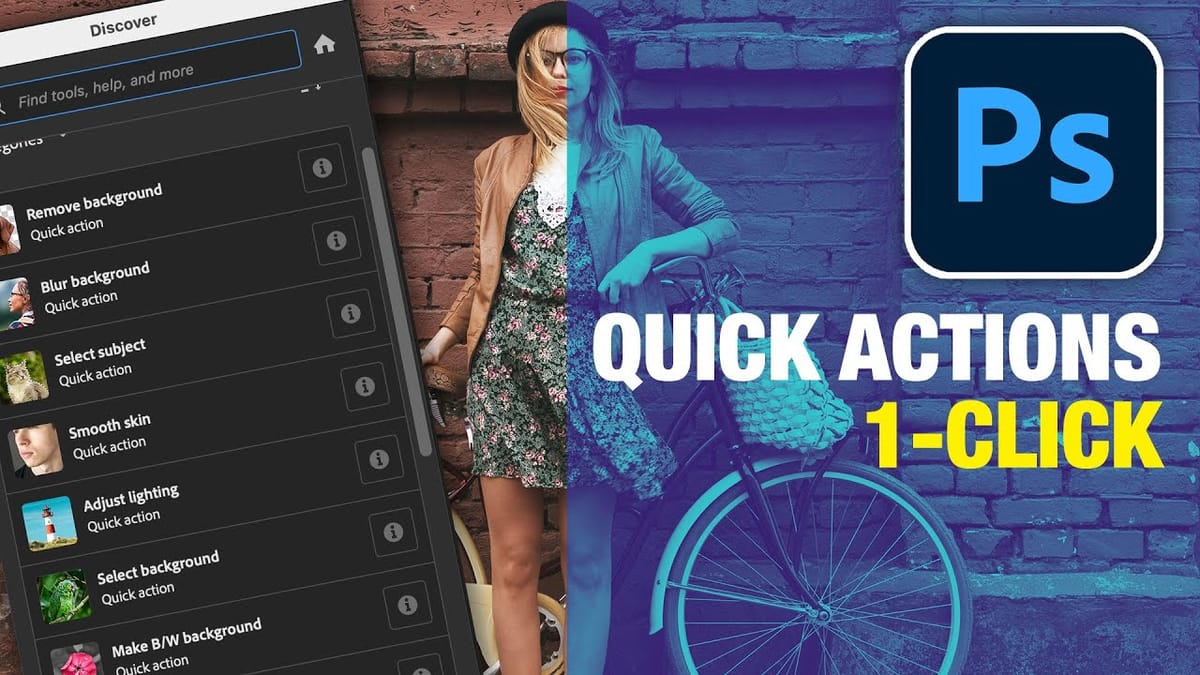
Did you know Photoshop has new Quick Actions?
Do things faster in Photoshop with 1-click quick actions. Colin Smith shows you how to find and use Quick actions in photoshop. You can blur backgrounds, apply duotones, remove backgrounds and more. The Blur background doesn’t work well, but Colin has a hack that will give you perfect background blurs. More
How to Create and Play Back Actions in Photoshop
This Photoshop tutorial from Aaron Nace at Phlearn offers a clear process for blending graphics with portraits. You will learn how to use the Super Zoom feature, which allows you to upscale graphics while maintaining their original resolution. This is crucial for ensuring that your images remain sharp and professional.
Exploring the Latest Features in Photoshop 2025
Designers and digital artists frequently encounter challenges with precise selections, efficient object manipulation, and keeping workflows streamlined. As creative software evolves, staying current with the latest features can be daunting, yet it is essential for enhancing productivity and expanding creative possibilities. This article and accompanying video delve into the significant

Get tutorials & freebies delivered to you.

Subscribe to the Photoshop Roadmap newsletter, a weekly roundup of new tutorials, insights and quality downloads, trusted by 6500+ readers.

You might also like

How to Create Circle Cropped Photos with Transparent Backgrounds in Photoshop

Circular cropping transforms standard photographs into clean, professional profile images perfect for websites, social media, and presentations. The frame tool method creates non-destructive crops with transparent backgrounds that export seamlessly across different platforms. This streamlined workflow eliminates the need for complex selections or masks while maintaining full control over image...

How to Use Generative Upscale to Restore and Enhance Low-Resolution Images in Photoshop

Low-resolution images often limit your creative projects, especially when you need sharp prints or high-quality displays. Photoshop's Generative Upscale feature transforms small, pixelated photos into crisp, detailed images using AI-powered enhancement. This tool offers three distinct AI models, each designed for specific image types—from landscapes and portraits...

How to Use Harmonize to Automatically Match Lighting in Photoshop Composites

Creating seamless composites traditionally requires hours of manual color correction and lighting adjustments. The new Harmonize tool changes this by automatically analyzing your background and matching your subject's lighting, shadows, and color tones with a single click. This AI-powered feature eliminates the need for complex adjustment layers and...

How to Use Adobe Photoshop in ChatGPT for Photo Editing

Adobe Photoshop is now integrated directly into ChatGPT, allowing you to edit photos using simple text descriptions. This new feature lets you enhance images, apply creative effects, and make targeted adjustments without needing a Photoshop subscription. You can describe what you want to change and fine-tune adjustments using familiar Photoshop...

How to Fix Skin Tones in Photoshop - Complete Guide

Skin tones can make or break a portrait, yet color casts and uneven lighting often leave subjects looking unnatural or flat. Whether dealing with mixed lighting conditions, camera white balance issues, or post-processing mishaps, getting skin colors right requires a systematic approach that works consistently across different scenarios. This comprehensive...

You’ve successfully subscribed to Photoshop Roadmap
Welcome back! You’ve successfully signed in.
Great! You’ve successfully signed up.
Success! Your email is updated.
Your link has expired
Success! Check your email for magic link to sign-in.